The Penguin Project
Milestone 01
The Penguin Project
Children explore where penguins live, what they eat and how they survive the cold.
Habitats · Adaptation · Curiosity




Senior KG prepares children for Grade 1 by deepening their thinking and curiosity. The year opens with a fun deep-dive into penguins. Children then move into early science, learning how the body works inside and out and how animals are grouped as vertebrates and invertebrates.
Children explore where penguins live, what they eat and how they survive the cold.
Habitats · Adaptation · Curiosity
Children learn about internal and external body parts and classify animals as vertebrates and invertebrates.
Human Body · Animals · Classification
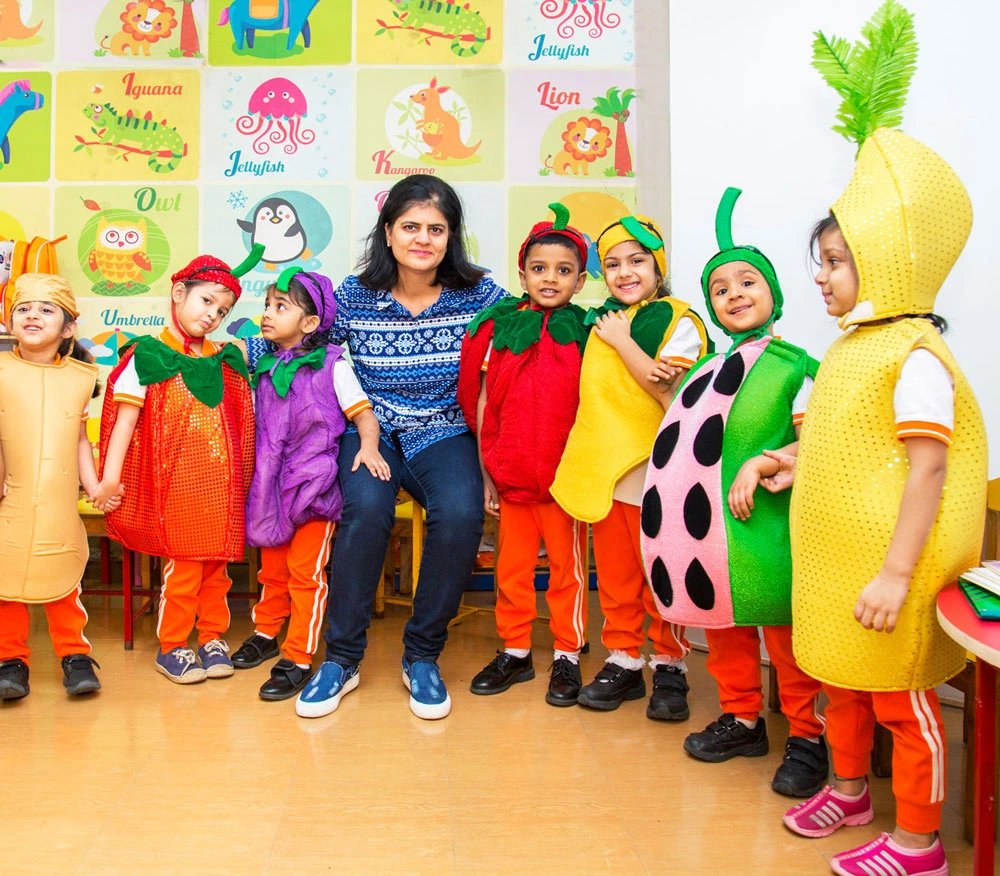
Children talk about real-life superheroes, the food we eat, the marine world, and space and seasons.
Community · Nutrition · Oceans · Space
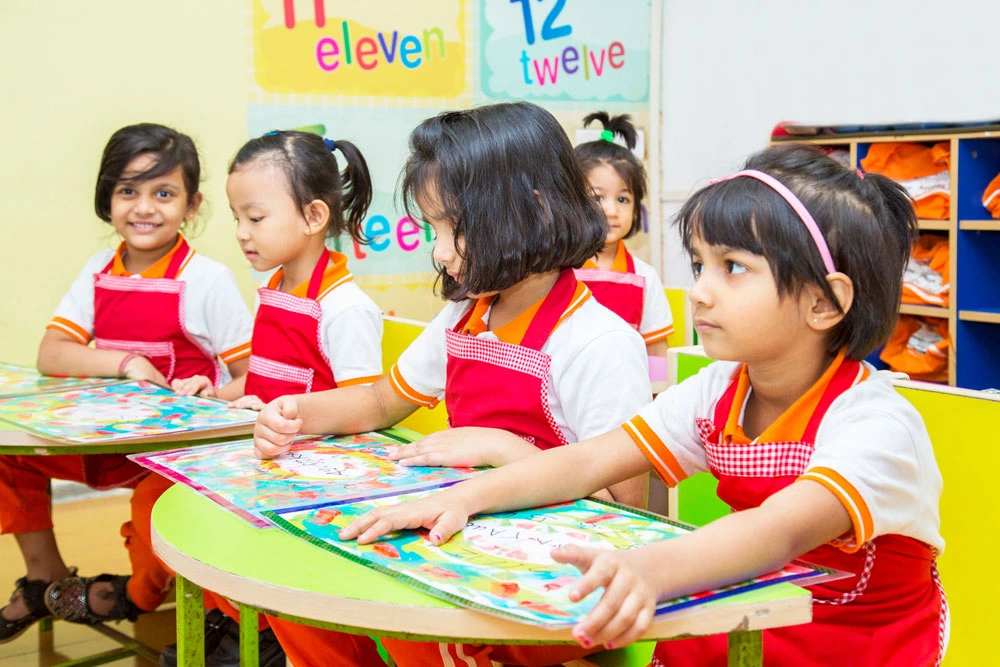
Children celebrate festivals from around the world, building respect for different cultures.
Festivals · Culture · Respect
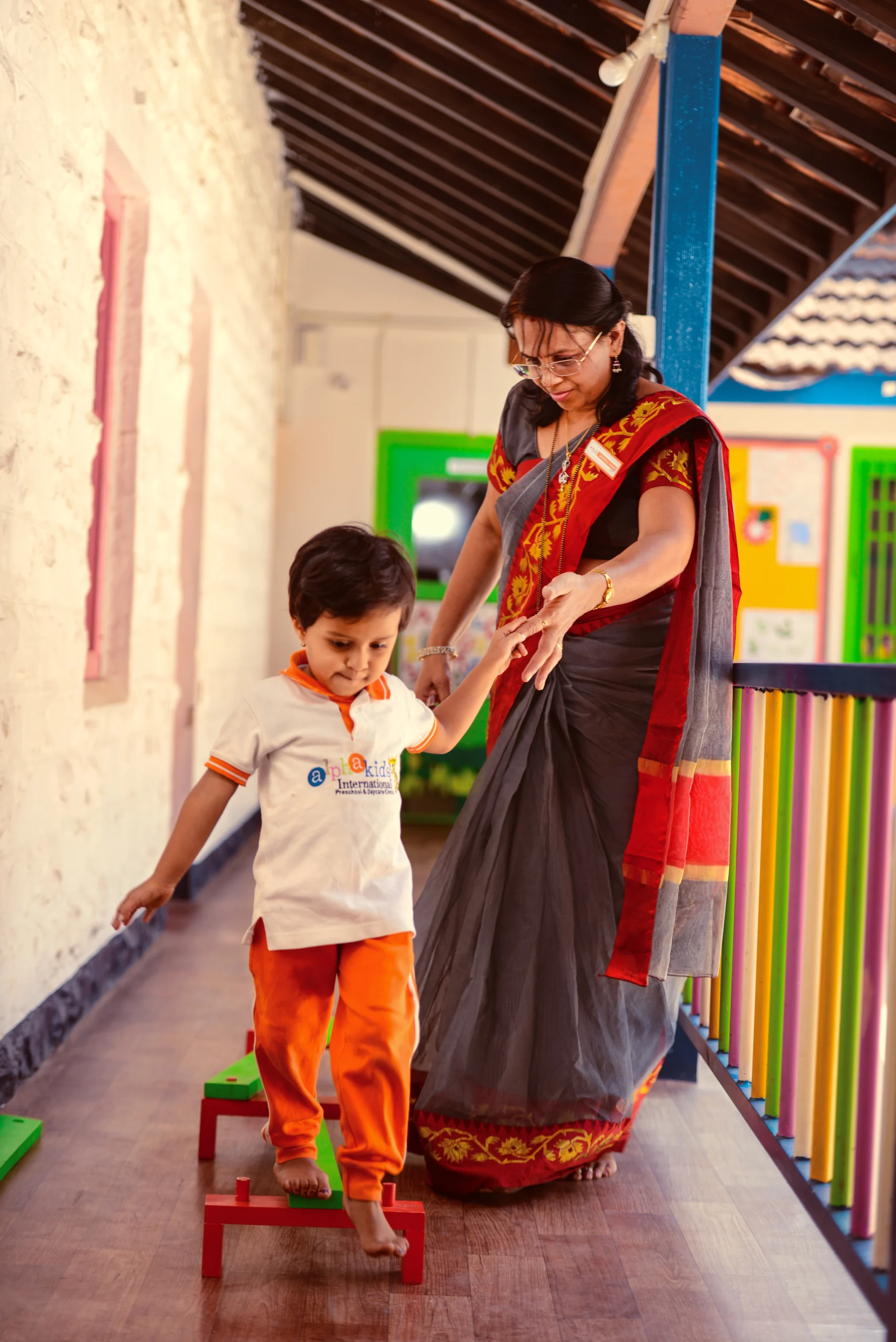
The year finishes with dinosaurs and life cycles, followed by revision to make sure every child is school-ready.
Life Cycles · Revision · Grade 1
Our senior KG syllabus follows the ASTERIA pedagogy, building the mind (IQ), heart (EQ) and soul (SQ) through projects, experiments and stories.
Choose a chapter and open the activities to explore your child’s experiences.
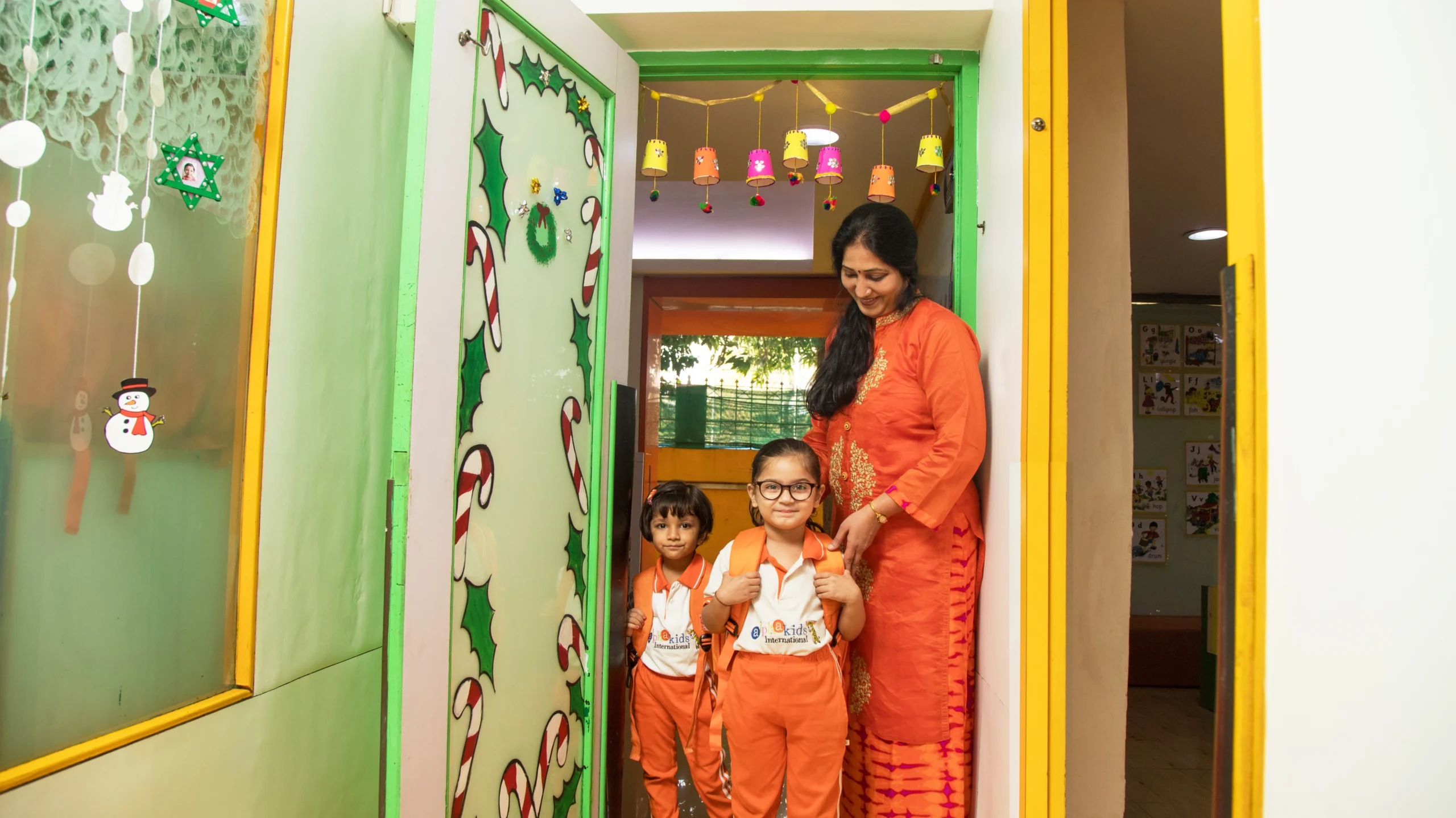
A penguin project, covering where penguins live, what they eat and how they survive the cold.
Learning about internal and external body parts through models, songs and simple activities.
Sorting animals into vertebrates and invertebrates, which is their first taste of classification.
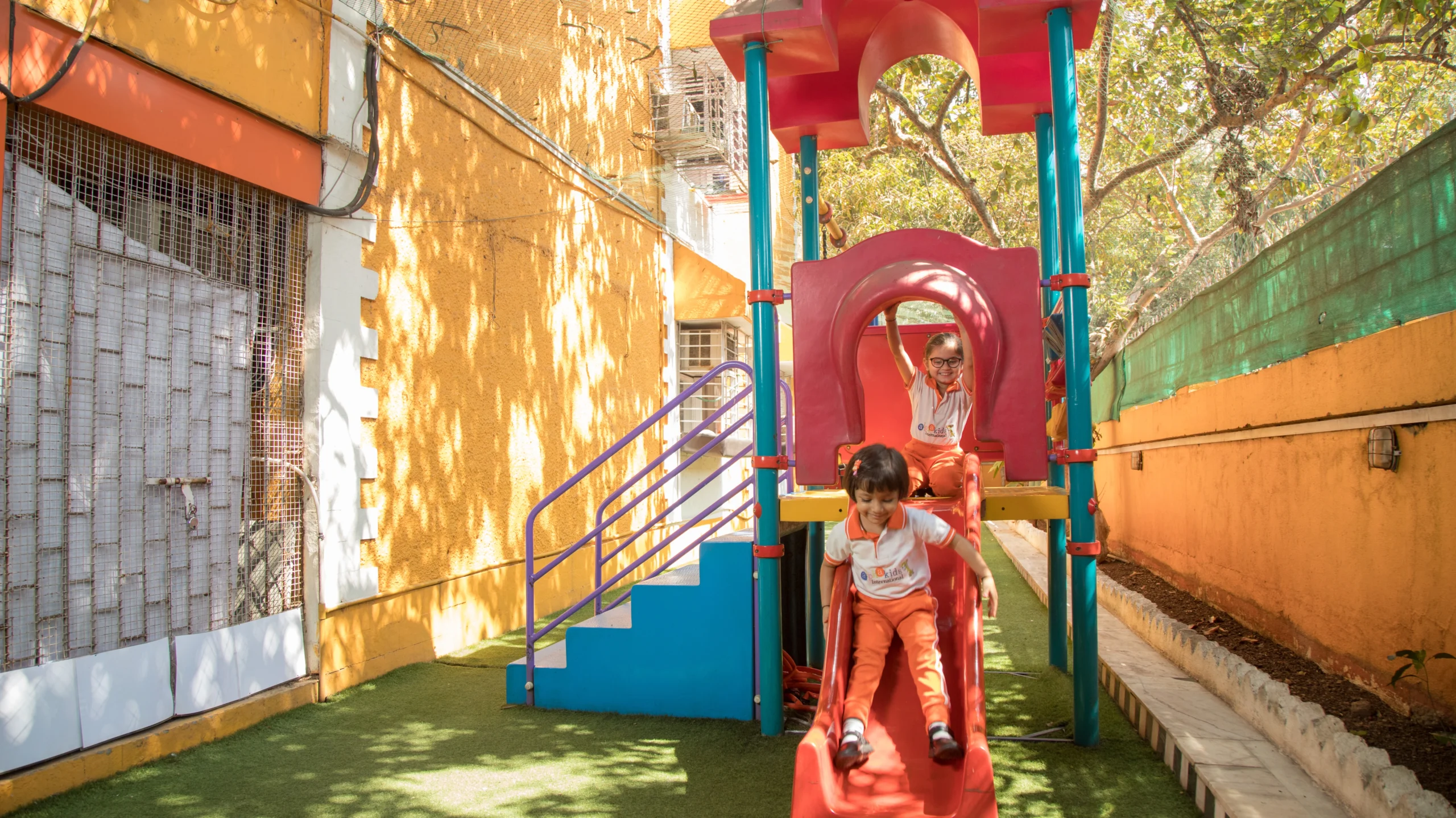
Discussing everyday superheroes, from doctors and firefighters to family members, and what makes someone a hero.
Food and nutrition activities that encourage healthy choices.
Exploring oceans, planets and changing seasons through experiments and craft.
Celebrations from around the world, which build respect for different cultures.
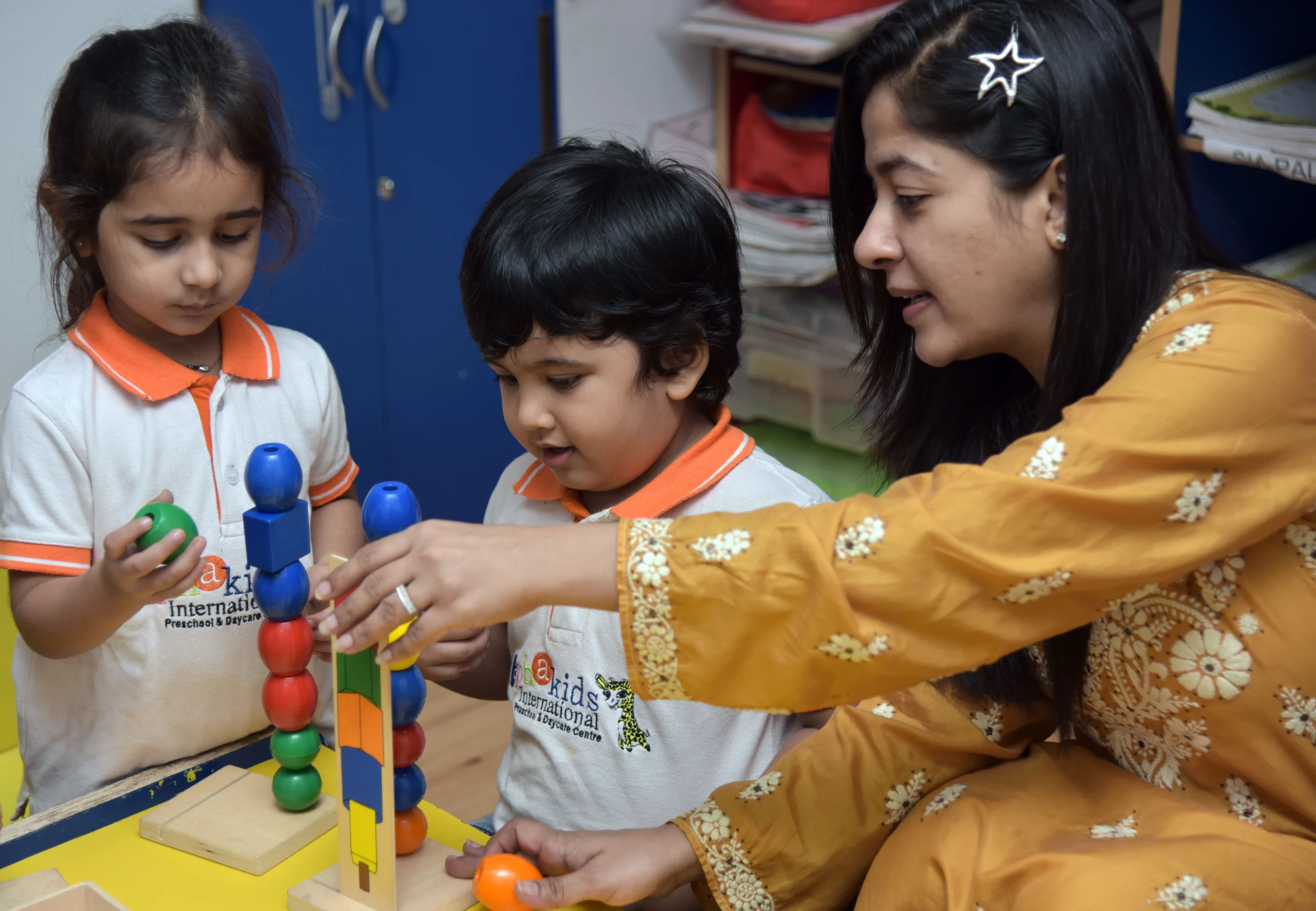
Dinosaurs and life cycles of plants, butterflies and frogs, with hands-on observation.
Revision and readiness activities for a confident move to Grade 1.
These activities build reading, writing and number skills, scientific thinking and independence, the things children need on their first day of big school.
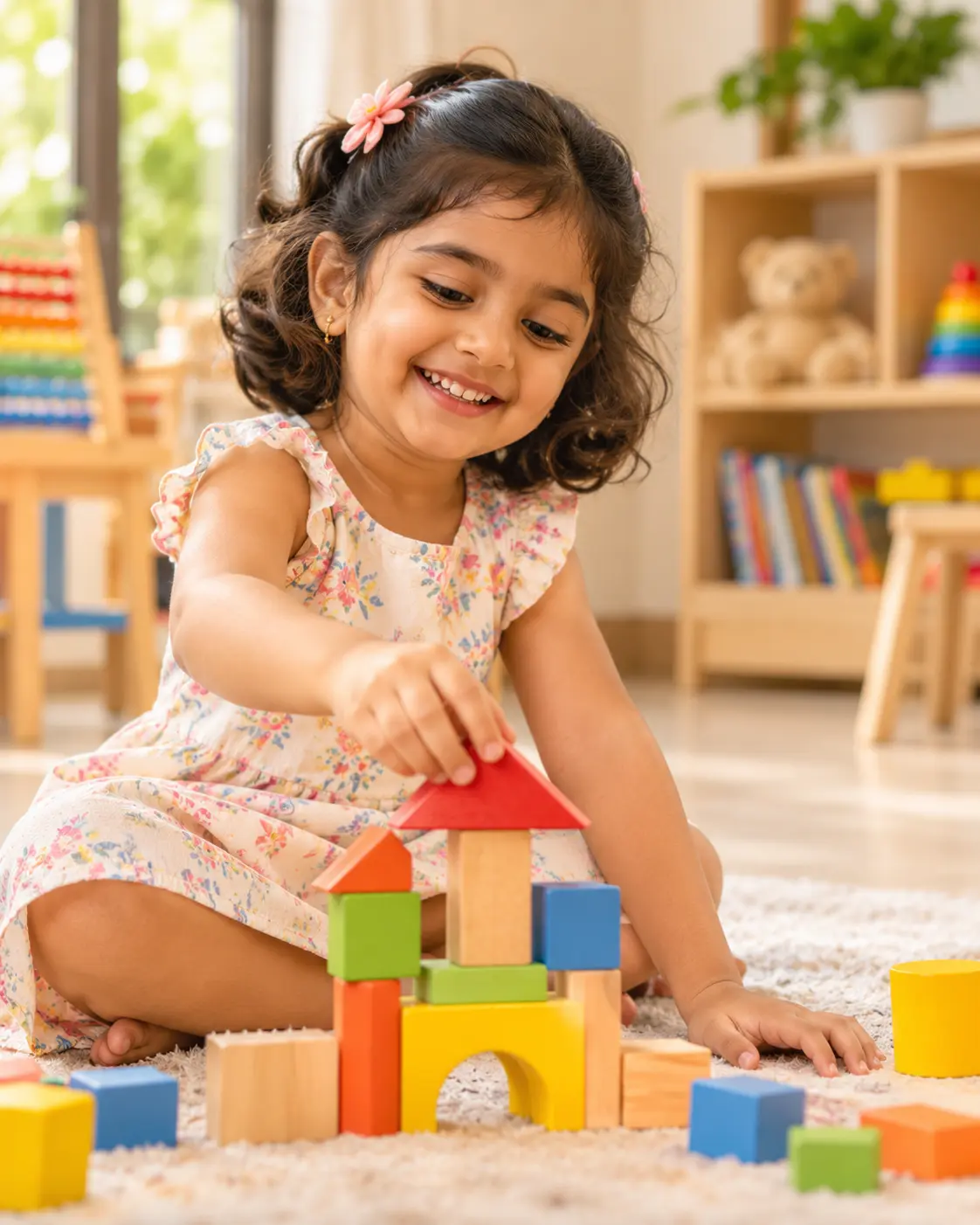
Sr. KG groups are kept small, so every child gets personal attention from our trained teachers. Sr. KG admission is now open. Visit our Karelibaug campus and see a Sr. KG class in action.
*Please confirm the ratio and schedule with the admissions team.
What your child will be able to do by the end of Senior KG:
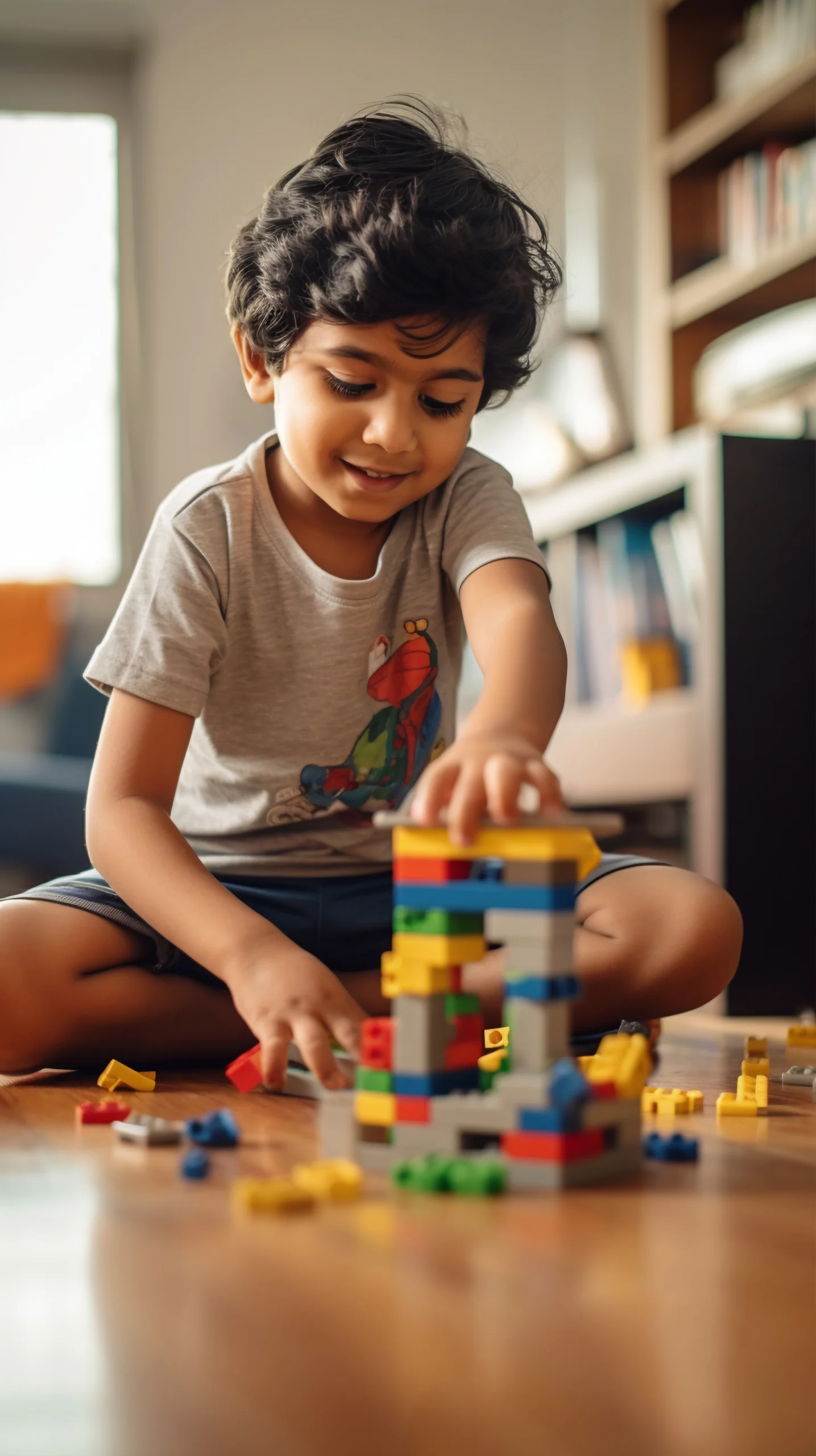
Blending sounds, reading short words and simple sentences
Writing letters, numbers, their own name and short words neatly
Counting and writing numbers, simple addition, shapes, patterns and comparing
Observing, sorting and classifying; asking “why” and “how” questions
Working in teams, speaking in front of the class, respecting other cultures
Managing their own bag and belongings, following instructions, finishing tasks
Everything you may want to know about our Senior KG programme.
Children aged 4.5 to 5.5 years can join the Senior KG programme at Alphakids. The curriculum is designed to support their developmental needs while strengthening their academic, social and emotional skills before entering primary school.
Our Sr. KG programme helps children develop foundational reading, writing, mathematical and problem-solving skills through engaging activities. It also encourages independence, concentration, communication and confidence.
Junior KG introduces children to letters, numbers and everyday concepts through play-based and thematic learning. Senior KG builds on these foundations with early reading, sentence formation, simple mathematics and introductory science concepts, gradually preparing children for formal schooling.
After completing Sr. KG at Alphakids, children have the opportunity to continue their educational journey at Mauryan High School, located on the Sigma University campus. This provides an option for K–12 educational continuity and a smoother transition from preschool to primary school.
Alphakids does not conduct formal examinations in kindergarten. Instead, teachers assess children’s progress through regular observation, classroom participation and learning activities. The emphasis is on understanding concepts, building confidence and developing essential skills without unnecessary academic pressure.